
the sofa, the piece of furniture we no longer see
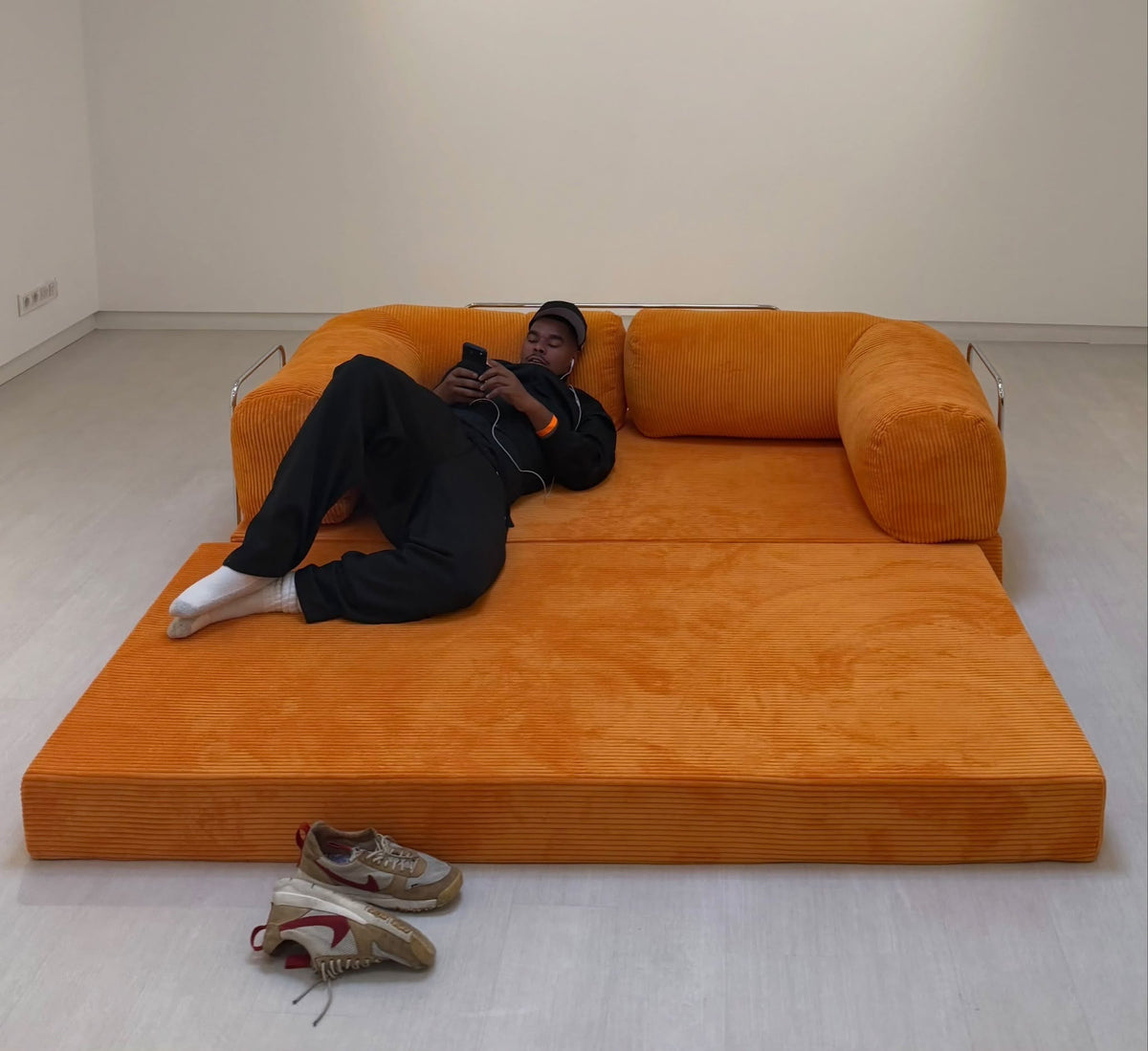
The sofa is so well integrated into our homes that we have stopped noticing it.
Leather or fabric, two, four or six seats, small, medium or large, it follows us through every stage. On Sunday mornings in front of the TV as a child, then, later on, to unwind and catch our breath. It is the comfort piece of the home, where we find ourselves alone or in company to share a moment of daily life.
A room of one’s own
This safe place quickly embodies a whole world, a kind of room of one’s own within the home. Rarely replaced, for lack of financial means but also because of its emotional weight, it moves from one home to the next, carrying its share of memories and adapting to each space.

Yet this small fragment of life does not stop at the door of our living rooms. In museums, waiting rooms and cafés, it sees entire lives pass by, sharing the same piece of fabric for a moment. More than that, it is in places of conviviality and social spaces that it takes on its full meaning. There, it is not only for sitting, it is for meeting.
This is notably the case of the Maisons des jeunes et de la culture (MJC), associations that support and champion the residents of a neighbourhood, young people in particular, through a range of workshops. You may first come for an activity, but you end up staying for the people. Between two workshops, at snack time or while waiting for an appointment, it is often on the sofa that everything happens. People cross paths, talk, get to know each other. It is the informal rallying point, the one that helps turn a place of activities into a place of life.
Where it all begins
Here, sofas no longer simply watch the world go by, they accompany journeys. After school, a child has a snack there with others while their mother is at an appointment, and makes their first friends without even realising it. Later, they come back for the workshops, discover a practice, meet new people. Then they come with their friends, find their feet, get involved, offer to look after younger ones who resemble them in turn. One day, their own children settle in there and, older, they drop by to keep in touch with their neighbourhood, see familiar faces, remain a link in the community. And the cycle begins again.
Giving back
For Alchimist, this furniture is anything but insignificant. We like to bring people together and share, to create connections with as many people as possible. Based in the 19th arrondissement of Paris, a neighbourhood close to our hearts because it embodies the diversity and social mix of the city, we have, for the most part, benefited from these community organisations, as participants or as facilitators. It therefore seemed natural to give back to the community what it has given us.
It is in this spirit that we collaborated with the Danish furniture brand OMHU. Specialising in convertible sofas, it offers models that adapt to every use and every audience. For its campaign around the TEDDY, which became “TEDY” in its dupe version, OMHU first poked fun at the brands that had copied its design, but it also built in a message about accessibility by offering the sofa at half price.

We wanted to extend this idea by donating the sofa to the Centre Social et Culturel Jaurès-Petit-Pantin (J2P). A way of giving it a second life, where it will be genuinely used, in a welcoming space, among residents, for meetings, breaks and shared moments (and, we hope, plenty of snacks). Because, in the end, a sofa is never as useful as when it is shared.
About OMHU
OMHU is a furniture brand based in Copenhagen, best known for its iconic TEDDY sofa. Its modular, stackable design has become one of the most recognisable and most copied pieces of furniture on the internet.
About the Centre Social et Culturel Jaurès-Petit-Pantin (J2P)
Jaurès-Petit-Pantin (J2P) is a neighbourhood association based in the 19th arrondissement of Paris. Since 1997, it has pursued goals of local social, cultural and economic development. The association now runs a social and cultural centre and continues to carry out a project for the area. To this end, a wide range of activities (social, educational, cultural or leisure) and various convivial formats (neighbourhood parties, street events, themed evenings…) are therefore organised.
Article in collaboration with OMHU
comments (0)
No comments yet. Start the conversation.